The Bitcoin exchange whale ratio explained simply: it measures what share of Bitcoin deposits to exchanges comes from large holders, or whales, compared with all other deposits. The indicator helps readers see whether big investors are moving coins onto exchanges, potentially to sell, or keeping them in private wallets. Like all on-chain tools, it can fail or produce false signals, so it is best read together with other market data.
Key takeaways
- The exchange whale ratio tracks large-holder deposits into exchanges relative to total exchange inflows.
- A rising ratio can suggest whale selling pressure, while a low ratio often means whales are keeping coins off-exchange.
- The ratio is descriptive, not predictive, and should never stand alone as a buy or sell signal.
- Combine it with exchange reserves, funding rates, and sentiment indicators for a fuller picture.
Bitcoin exchange whale ratio explained
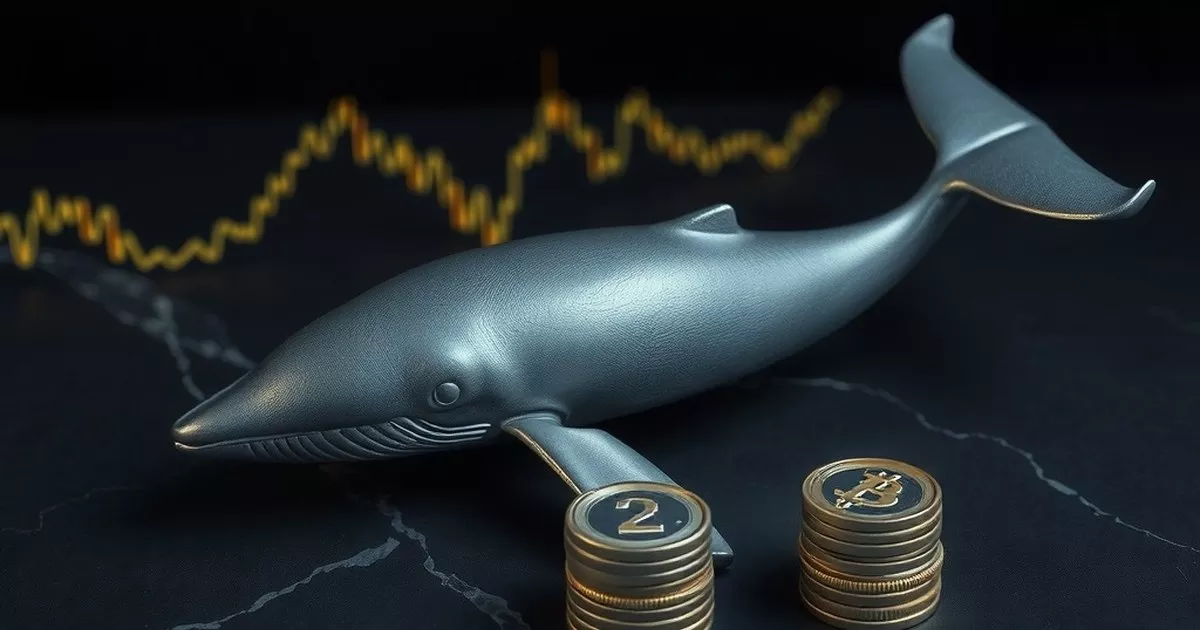
Large holders, often called whales, move significant amounts of Bitcoin. When those coins land on an exchange, the market often interprets the move as preparation to sell. The exchange whale ratio isolates that behavior by comparing whale-sized deposits to all deposits arriving at exchanges over the same period.
Whales and exchange flows
Whales are not a single group. They can be early adopters, mining pools, custodians, or institutional desks. What matters for this indicator is the destination: an exchange deposit makes coins liquid and tradable, while a withdrawal usually moves them toward cold storage or private custody.
Why deposits matter more than withdrawals
Deposits to exchanges are often watched more closely than withdrawals because selling requires coins to be on an exchange. A withdrawal removes selling pressure from the order book, at least temporarily. By focusing on inflows, the ratio highlights moments when large holders may be increasing their ability to sell quickly.
What the ratio measures
The ratio expresses whale inflows as a portion of total exchange inflows. If the value is elevated, most of the coins arriving on exchanges come from large holders. If it is low, smaller accounts make up most of the activity.
| Ratio level | What it may suggest |
|---|---|
| Elevated | Whale deposits dominate inflows; possible distribution |
| Moderate | Whales and smaller holders deposit at similar rates |
| Low | Whale inflows are small relative to total exchange deposits |
These zones are not fixed rules. Different data providers classify whale wallets differently, so the same day can show different values across platforms. Readers should not memorize a specific cutoff. The useful information is usually the direction and speed of change rather than the absolute number on a single day.
How it is calculated
Most providers calculate the ratio by identifying exchange deposit transactions that originate from wallets labeled as whale addresses, then dividing that sum by all exchange deposits in the same window. The result is usually shown as a line chart over time.
Classification methods vary. Some platforms use a minimum deposit size, others rely on wallet clustering, and some track known entity addresses. Because of this, readers should treat the line as a trend guide rather than an exact measurement.
How to read the chart
On the Whale activity chart, look for sharp upward moves in the ratio line that line up with price tops or local highs. A sustained rise while price is flat can mean whales are quietly positioning to sell. A sharp drop during a price rally can mean large holders are withdrawing coins, reducing immediate selling pressure.
Divergences are often more informative than the raw level. If price makes a new high but the whale ratio stays low, the rally may be driven by smaller buyers rather than whale distribution. If price falls while the ratio spikes, whales may be adding to exchange supply. Extreme readings during strong bull or bear markets can persist for weeks, so a single spike is not a reason to act by itself.
Limitations and context
The indicator can fail. Whales deposit coins for many reasons besides selling: collateral for derivatives, lending, over-the-counter settlement, or simple wallet rebalancing. Exchange addresses also change over time, and off-exchange transfers are invisible to on-chain data.
Because of these blind spots, the ratio should not be treated as a timing signal. It works best as one input among several. For a companion view of how many coins exchanges hold overall, see Bitcoin Exchange Reserve Explained: Coins Held on Exchanges.
Using it with other indicators
Pair the ratio with tools that measure sentiment and leverage. The Fear & Greed Index shows whether the broader market is euphoric or fearful, which can help interpret whether whale deposits match crowd behavior. Funding rates and open interest reveal whether derivatives traders are overleveraged, while exchange reserves show the total inventory available for sale.
None of these tools guarantee a particular outcome. Markets can remain irrational longer than indicators stay extreme, and any single metric can break down during unusual events.
FAQ
Is a high whale ratio always bearish?
No. A high ratio means whales are depositing, but they may do so for collateral, lending, or other non-sales reasons. Price context and other indicators matter more than the ratio alone.
Can the ratio predict a price top?
No. It is descriptive, not predictive, and can produce false signals. Never use it by itself to time entries or exits.
How is a ‘whale’ defined?
Providers differ. Some use deposit-size thresholds, others use wallet clustering or known entity addresses. Because definitions vary, ratio values are not directly comparable across every platform.
Should I check this ratio every day?
Not necessarily. Daily moves can be noisy. The ratio is often more useful during strong trends or when read alongside reserves, funding rates, and sentiment.
Does this constitute financial advice?
No. This article is general information only. It is not financial, legal, or tax advice, and it does not recommend buying or selling any asset.
Next step
To see how large-holder deposits fit into the broader market, review the Fear & Greed Index for sentiment and the Mayer Multiple for longer-term valuation context.